
Resonance Review Roundup: What Critics Agree On
What critics praised
This roundup does not claim that the site completed a first-person review. It compares the supplied launch coverage from IGN, Polygon, Rock Paper Shotgun, GamesRadar, Push Square, Shacknews, and Destructoid. Reception is mixed to positive, but the sources are not uniform enough to justify manufacturing one normalized average score.
- A more capable and active lead character.
- Parry-focused melee combat.
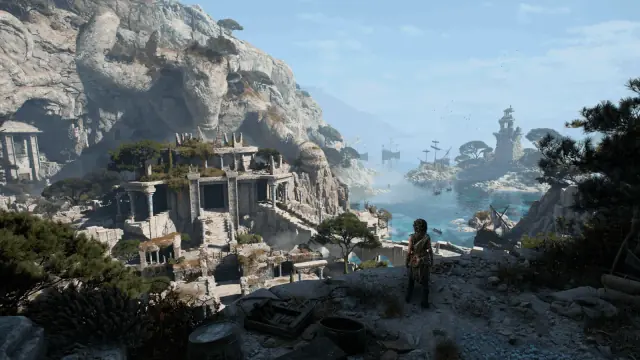
- Crete, Minoan ruins, and the two-era setting.
- A willingness to change the series formula.
What critics questioned
Sophia’s combat is a recurring strength. Parries, counters, and her ability to fight back create a more active rhythm than Innocence or Requiem. Crete, the Minoan ruins, and the two connected eras also give the game a setting that several critics considered distinctive.
The most consistent reservation is also the game’s central change: by moving toward direct action, Resonance can feel less mechanically unique than Innocence and Requiem. Individual outlets disagree on whether that tradeoff succeeds.
Who is most likely to enjoy it
The main criticism follows from the same change. Without rat hordes and much of the earlier stealth pressure, Resonance can feel like a more conventional action adventure. Several supplied reviews also describe the later light puzzles as repetitive, while the reinterpretation of the Theseus myth divides opinion.
Players interested in Sophia, melee combat, exploration, and puzzle-led adventure are closer to the positive side of the critical split. Players primarily seeking the earlier games’ stealth pressure and rat systems should expect a different emphasis.
How to read the scores
The result is a clearer audience fit than a universal verdict. Players drawn to Sophia, parry combat, exploration, and environmental puzzles sit closer to the positive side of the split. Players chiefly seeking the earlier games’ rat systems and stealth tension should expect a different priority. That conclusion is source synthesis, not invented personal experience.
Outlet scores vary and are not averaged here because the supplied material supports a qualitative consensus more reliably than a single normalized number.
Evidence limits
This is a launch-review synthesis, not a claim of first-person testing by this site.
Sources
Evidence reviewed on August 28, 2026. Links open the source used for the claims above.